 5th November 2026 (Updated on 5th November 2026)
Why Are There So Many Strange Village Names in Suffolk?
By Carl Scott
Suffolk has some magnificent place names. Names that sound like somebody sneezed halfway through a conversation, or lost a particularly competitive game of Scrabble. But before I go accusing my ancestors of making things up after a long evening at the pub, there’s often a rather good explanation. Our village names are little historical time capsules. The trouble is, they’ve been passed from language to language for centuries, and much like anything being handed down, they’ve picked up a few dents along the way. Which, frankly, makes them even better.
Many names have roots in Old English, the language spoken by Anglo Saxon communities. Common endings offer useful clues. A name ending in ‘ton’, for instance, often points towards a farmstead or settlement, while ‘ham’ can indicate a homestead or enclosure.
Similarly, names ending in ‘ford’ frequently indicate a river crossing. Those containing ‘ley’ or ‘leigh’ can refer to a woodland clearing. These elements are not infallible translations, but they reveal how early inhabitants described the practical features of their surroundings.
Take Bury St Edmunds as a working example. Its name connects the town with Edmund, the East Anglian king whose cult helped make the medieval abbey a major pilgrimage destination.
Suffolk also carries traces of Scandinavian influence. Viking activity and settlement affected East Anglia, leaving marks on local language and place naming. However, it would be a mistake to assume that every unusual sounding name must be Viking. Many developed from personal names, landscape descriptions or words that have disappeared from everyday speech.
And this is where things get really interesting. A name that sounds ridiculous to modern ears often made perfect sense to the people who first used it.
Pronunciation adds another layer of mystery. Local speech has often shortened or softened names over generations. Visitors who confidently pronounce every written letter may find themselves laughingly corrected by someone who has lived nearby all their life. The written form can preserve older sounds even when spoken language has moved on.
There are also delightful pairs and contrasts. It’s not unusual, for example, to find yourself encountering a ‘Great’ or ‘Little ‘ destination around Suffolk where the labels do not always match their present sizes.
For curious travellers, village names make an excellent excuse to investigate local history. A church noticeboard, heritage trail or parish website may explain a name’s likely origin, although scholars sometimes disagree. Spellings recorded in medieval documents can be more revealing than modern guesses based on familiar English words.
And Suffolk still has plenty of surprises.
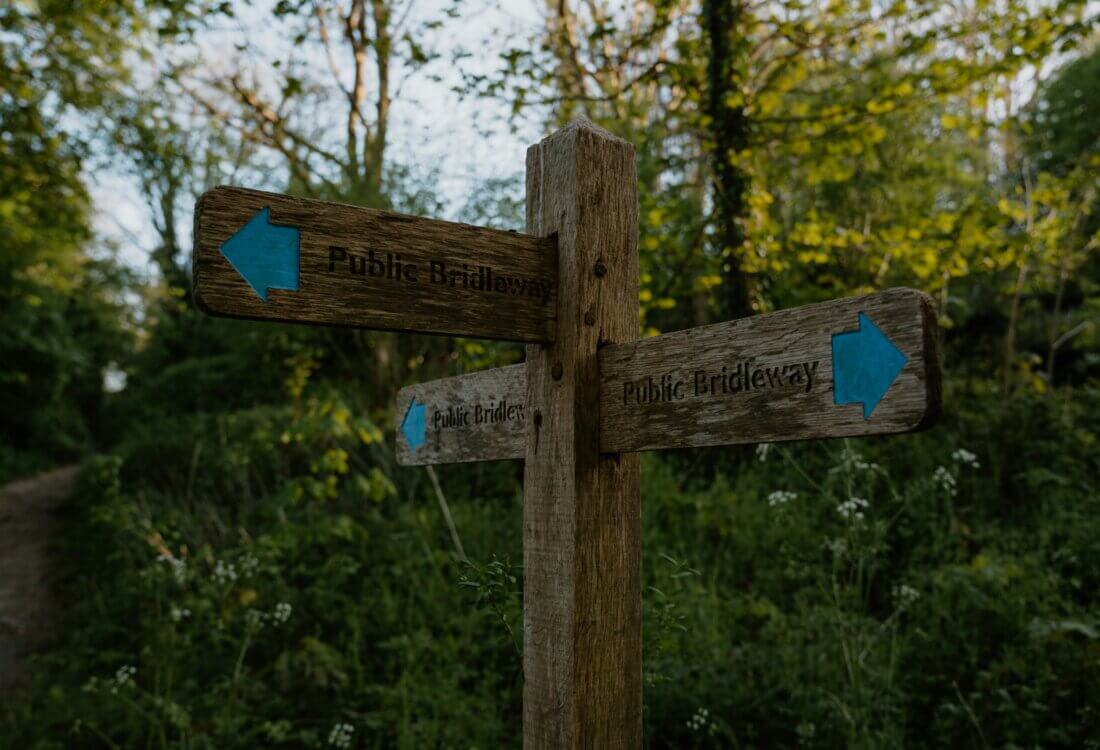
The best approach is to treat each name as a miniature archaeological site. Beneath its modern spelling lie fragments of farms, families, rivers and long forgotten boundaries. Suffolk’s signposts are not simply directions. They are tiny historical documents, offering clues about how generations of people understood the land around them.
So the next time a Suffolk road sign makes you smile, don’t dismiss it as a bit of rural nonsense. It may be carrying a thousand years of history in a handful of syllables. And if you still can’t pronounce it, don’t worry. Ask somebody local. Just be prepared for the answer to sound nothing like the spelling.
To begin planning your holiday around Suffolk’s towns and villages today, be sure to take a look at the current availability of our dog-friendly Barns and Barges for rent.

 Dogs stay FREE