 24th August 2026 (Updated on 24th August 2026)
Why Are There So Many Enormous Churches in Tiny Suffolk Villages?
By Carl Scott
If you’ve spent any amount of time in Suffolk, you may have noticed something slightly odd.
You can drive into a tiny village consisting of a pub, a handful of houses and perhaps a postbox or egg stall, only to discover an absolutely enormous medieval church looming over the whole thing.
You’d be forgiven for wondering whether somebody got their calculations spectacularly wrong.
They didn’t.
Those huge churches are reminders and remainders of a time when Suffolk was considerably wealthier and more important than its sleepy modern appearance might suggest. Not that we consider it to be any less important, of course.
And much of the money came from sheep.
Yes, really.
During the medieval period, East Anglia became enormously prosperous through the wool and cloth trades.
Suffolk’s landscape was well suited to sheep farming, while towns and villages across the county became involved in producing and trading woollen cloth. All of this meant that by the later Middle Ages, successful merchants could become extremely wealthy.
And when medieval Suffolk people acquired a fortune, there were obviously no Range Rovers or enormous televisions on which to spend it.
Instead, one particularly effective way of demonstrating your wealth, civic pride and devotion to God was to put some serious money into the local church.
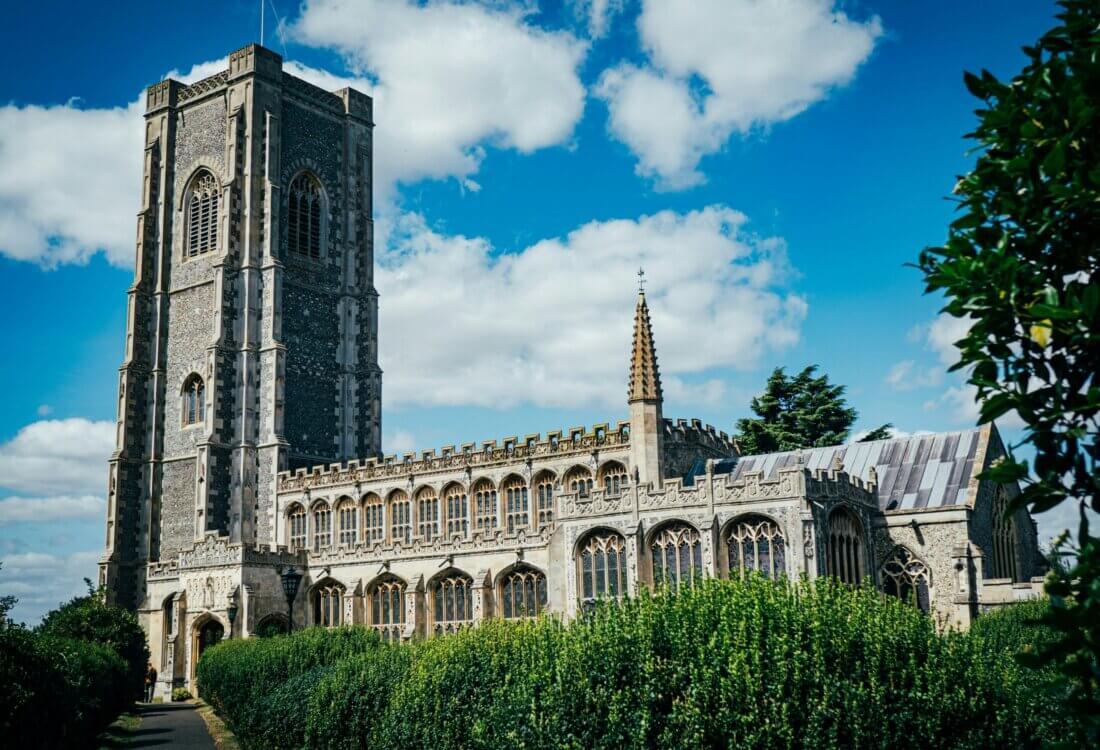
The result is what we now often call Suffolk’s “wool churches”: extraordinarily grand medieval churches standing in places that today seem far too small to justify them. Their towers, carvings and elaborate interiors are physical reminders of the fortunes once generated by the wool trade.
Lavenham is perhaps the most obvious place to see the legacy and a good example of this wool-wealth flexing.
Today it’s most famous for its wonky timber-framed buildings and impossibly photogenic streets. During the 15th and 16th centuries, however, Lavenham was an important centre of the cloth industry.
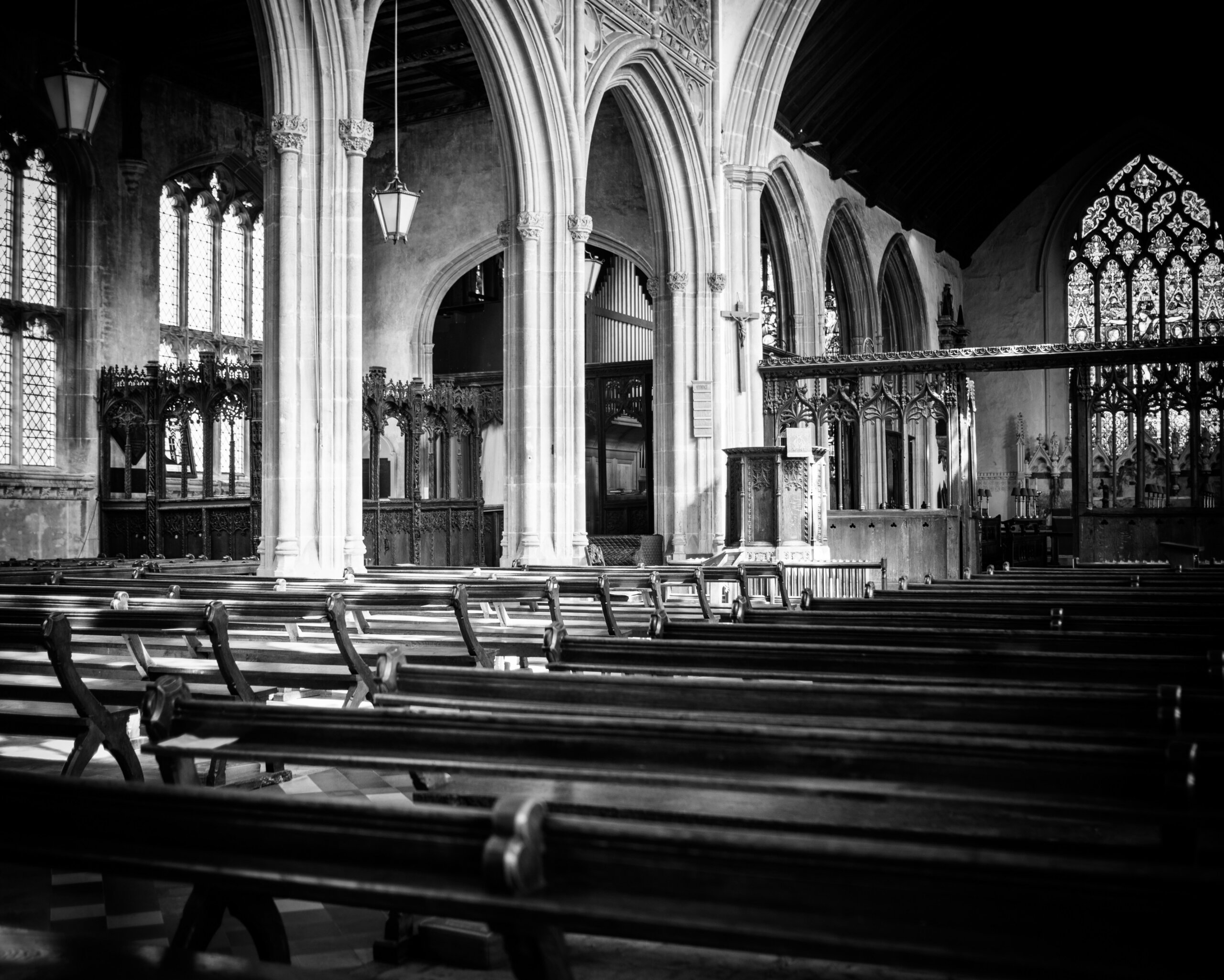
Its magnificent Church of St Peter and St Paul gives you some idea of the wealth that once flowed through the place.
It’s simply enormous.
Similar stories can be found at Long Melford and in communities across the county. Suddenly those oversized churches make much more sense.
These weren’t sleepy villages building above their means.
They were prosperous communities showing the world exactly how well they were doing.
What makes the story even more interesting is what happened afterwards.
Suffolk’s economic fortunes changed as the cloth industry developed elsewhere. Some settlements that had enjoyed having plenty of money stopped growing at anything like the same rate.
Ironically, that helped preserve them.
Instead of medieval buildings being continually replaced by newer development in the way you might expect these days, places such as Lavenham retained extraordinary collections of timber-framed houses.
The enormous churches stayed, too.
The businesses that funded them may be long gone, but their architecture remains.
It’s tempting to admire a Suffolk church from the road, take a photograph and carry on towards the nearest pub. But if the church is open, you are more than welcome, in fact you are encouraged, to have a look inside.
You’ll often find medieval woodwork, ancient fonts, memorials, carved angels and architectural details that have survived centuries of religious and social change.
Even the graffiti can be fascinating. Indeed, these buildings weren’t simply places people visited for an hour on Sunday. For generations they sat at the centre of village life.
Ultimately, we tend to think of Suffolk as quiet, rural and wonderfully unhurried when its churches tell another story.
Look across the landscape and those towers are essentially medieval skyscrapers in the way that they serve as monuments to communities that had money, ambition and something to prove.
So the next time you’re driving through Suffolk and spot a gigantic church towering over a surprisingly tiny village, remember the explanation.
Sheep.
Lots and lots of very profitable sheep.
To explore a range of these churches as part of your next holiday, be sure to take a look at the current availability of our Barns and Barges for rent in Suffolk.


 Dogs stay FREE