 14th May 2026 (Updated on 14th May 2026)
What “secure garden” really means on a Dog-Friendly holiday
By Carl Scott
A secure garden is one of the first things many dog owners look for when booking a Dog-Friendly Holiday Cottage.
That makes sense.
Nobody wants to spend their break worrying every time the back door opens.
But the phrase “secure garden” needs a bit more thought than it often gets.
Secure for which dog?
That’s the real question.
A calm older dog may be perfectly happy pottering around on the grass. A small terrier may notice a gap under the gate within ten seconds. A reactive dog may be safe inside the boundary but still spend the week barking at every movement through a see-through fence.
So fence height is only one part of the story.
The first thing to check is the gate gap.
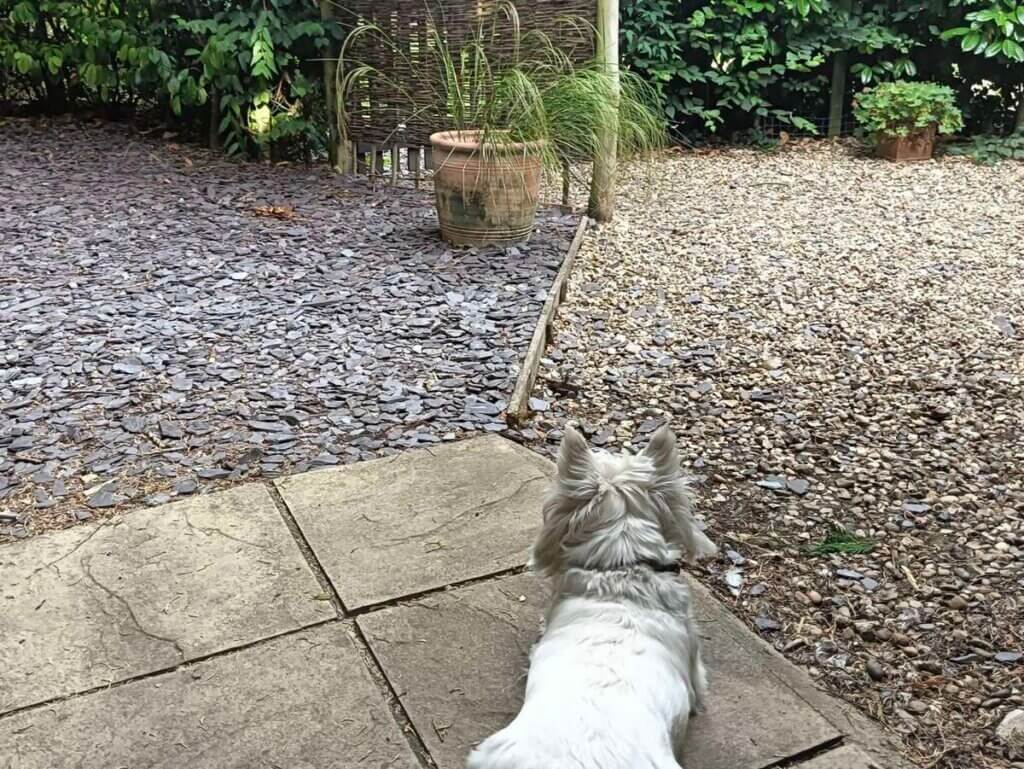
It’s not the glamorous bit, and it’s rarely the bit shown in photos, but it matters. Small dogs don’t need a huge opening. Some only need a small gap at the bottom of a gate to start nosing, digging or squeezing.
Then look at the low points.
Where does the fence meet the ground? Is there a dip? Is there a corner where the hedge thins out? Is there an old bit of boundary that looks fine from a distance but less convincing up close?
Humans admire the view.
Dogs assess the perimeter.
Annoying, but true.
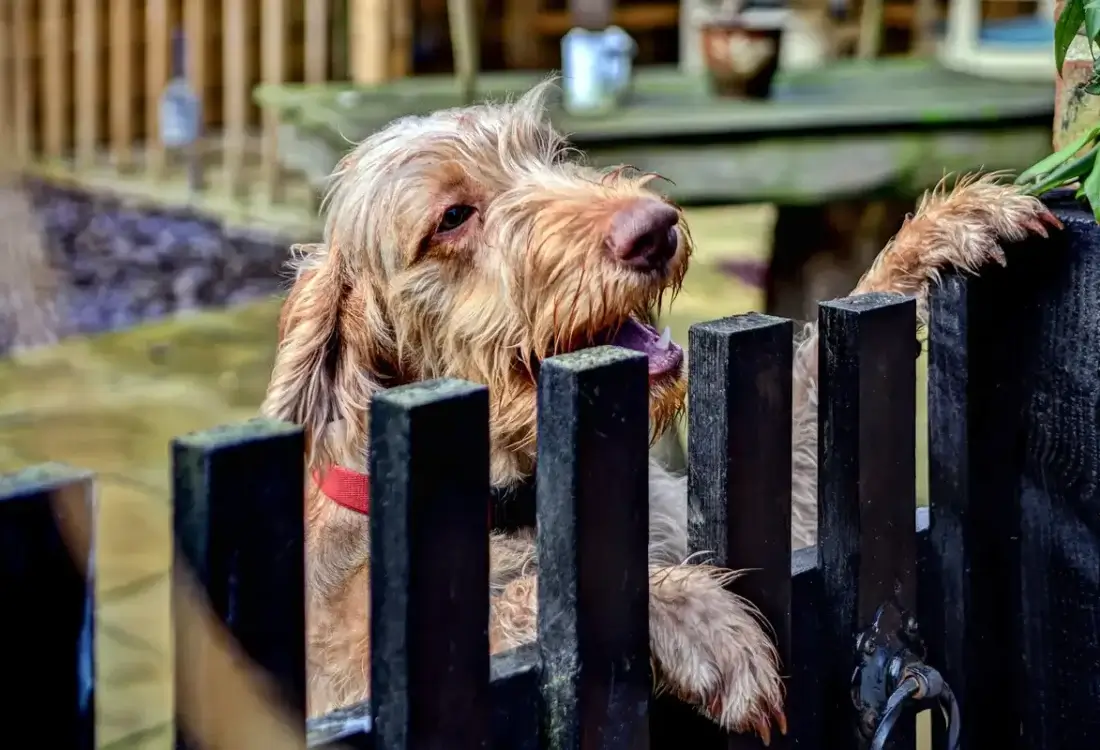
The next thing to think about is whether the boundary is solid or see-through.
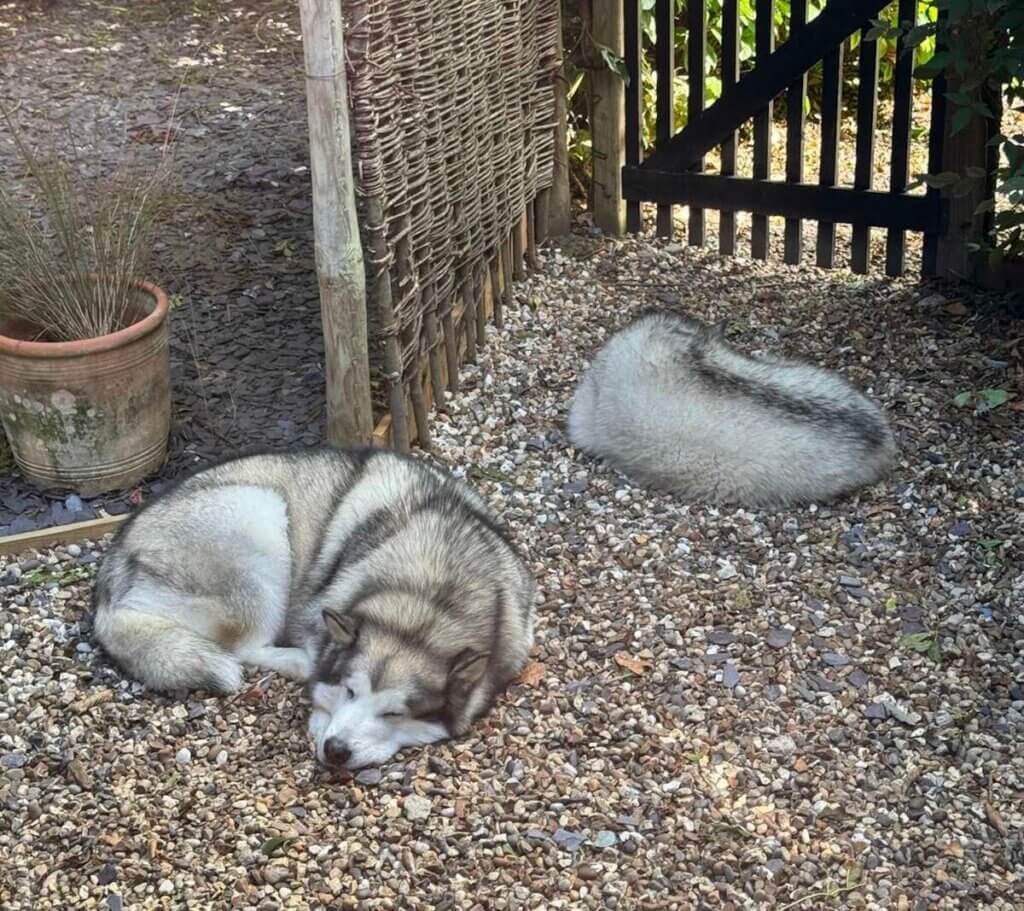
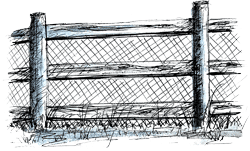
A see-through fence, railings or trellis may technically enclose the garden. But if your dog is reactive, vocal or easily wound up by movement, being able to see everything beyond the boundary may not be relaxing at all.
They may bark at passing dogs, cyclists, livestock, neighbours, birds, delivery drivers, or quite possibly a leaf with suspicious intentions.
For some dogs, a solid boundary is far calmer. It reduces the number of things they can react to and helps the garden feel more like a private space.
It’s also worth asking how the outdoor space works at the moments when people are distracted.
Arrival, first thing in the morning, unloading the car, bringing shopping in, clipping leads on, opening doors, shutting gates: these are the ordinary moments where mistakes can happen.
A good Dog-Friendly garden isn’t only about the fence line. It’s about how the space works when real people and real dogs are using it.
At Woodfarm Barns, we’ve spent years learning from real dog holidays. Our enclosed gardens, Pooch Paddocks and secure dog spaces aren’t there as a token feature. They’re there because we know the garden is one of the places where dog owners need to feel confident, not constantly on edge.
A secure garden shouldn’t only protect the dog.
It should help the owner relax.
That’s the whole point.
Before booking a Dog-Friendly Cottage, don’t just ask whether the garden is secure.
Ask whether it’s suitable for your dog.
That’s a much better question.
And it’s often the difference between a holiday where you’re constantly checking the door, and one where you can actually sit down with a cup of tea and stop worrying for five minutes.
Which, frankly, is part of the reason you booked the break in the first place.
FAQs
What does a secure garden mean for dogs?
It usually means the garden is enclosed, but the detail matters. Gate gaps, low points, weak boundaries and visual triggers can all affect whether it’s suitable for your dog.
Is fence height the most important thing in a Dog-Friendly garden?
Fence height matters, but it’s not the only thing. Small gaps, loose corners, dips in the ground and see-through boundaries can be just as important, depending on your dog.
Why are gate gaps a problem for dogs?
Small dogs may be able to squeeze under or push at gaps beneath gates. Even if they can’t escape, they may fixate on the gap, dig at it or become unsettled by what they can see or smell beyond it.
Are solid fences better for reactive dogs?
Often, yes. A solid boundary can reduce visual triggers such as passing dogs, people, cyclists or wildlife. That can make the garden calmer for reactive or vocal dogs.
What are Pooch Paddocks?
Pooch Paddocks are secure dog spaces at Woodfarm designed to give dogs more room to enjoy themselves safely. They’re part of making the whole stay more dog-thought-through.

 Dogs stay FREE