 24th August 2026 (Updated on 24th August 2026)
The Strange Things People Once Believed in Suffolk
By Carl Scott
Spend enough time exploring Suffolk and you’ll discover that our county has a slightly strange side. We mean this as a compliment and very much grounds for visiting, of course.
Behind the pretty villages, medieval churches and country pubs lies a Suffolk populated by ghosts, witches, mysterious animals and centuries-old superstitions. Go back a few hundred years and the things that kept Suffolkians awake at night had nothing to do with emails or wondering whether they’d remembered to put the bins out. There were considerably more supernatural concerns that are far more enjoyable for blog writers to get stuck into.
One fascinating remnant of these beliefs can still be traced on old buildings around the county. Look carefully at the timber and stonework of historic houses and churches and you may spot strange symbols scratched into them. These are sometimes known as witches’ marks, although “apotropaic marks” is the more correct, historian-friendly term.
Unlike the angular scrawling above motorways, however, such apotropaic marks weren’t graffiti. They were protection.
Circles, crosses and intricate patterns were carved around doors, windows and fireplaces as this precisely the places where evil was thought most likely to enter a building. And even in 2026, these seem like sensible places to set up some form of defence.
Indeed, it wouldn’t be entirely unreasonable to consider the markings as the historical equivalent of installing a burglar alarm, albeit one designed for supernatural burglars.
Occasionally, people went a little further when warding off bad news in Suffolk.
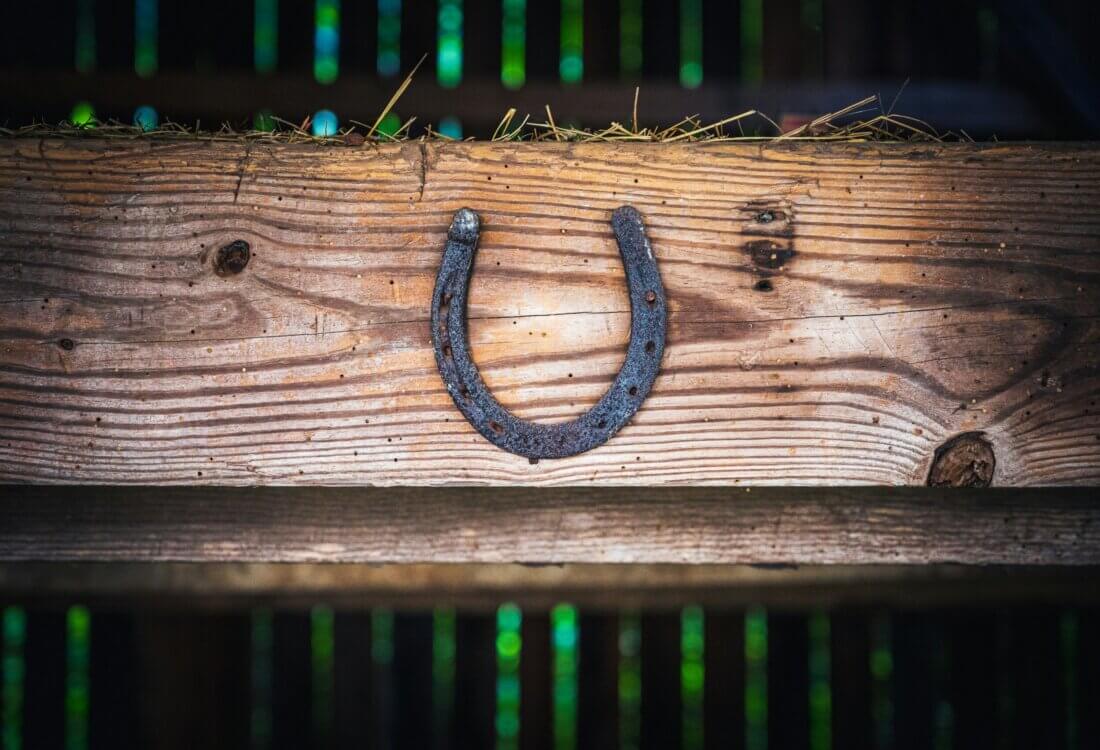
Objects were often concealed inside buildings as a form of magical protection. So-called witch bottles, for example, might be hidden away to guard a household against witchcraft.
Such belief in witches ultimately had much darker consequences than a few symbols scratched into a fireplace, however. Indeed, East Anglia became closely associated with witch trials during the 17th century, when fear of witchcraft was considered very real and the consequences devastating for those standing accused.
Perhaps the most notorious figure associated with the region was Matthew Hopkins, the self-appointed “Witchfinder General”, who operated extensively across East Anglia during the English Civil War. Behaving as part-lawyer, part evil-doer, Hopkins would roam the county condemning women to tragic ends.
For ordinary Suffolk residents at the time, the supernatural wasn’t necessarily something confined to stories (or blogs). Bad harvests, unexplained illness, livestock dying or simply a run of terrible luck could all demand an explanation.
Sometimes that explanation was witchcraft.
Of course, it would be remiss of us to consider producing this blog and neglecting Black Shuck.
East Anglian folklore is packed with stories of an enormous spectral black dog roaming lanes, churchyards and the coastline. One of the most famous tales concerns Bungay in 1577, when a terrifying black dog was said to have burst into St Mary’s Church during a violent storm.
Whether you regard Black Shuck as folklore, misidentified animals, centuries of storytelling or reason to walk back from the pub slightly faster is entirely up to you.
Suffolk has plenty of other supernatural traditions too. Ghostly monks, phantom coaches, haunted inns and mysterious lights have all found their way into local storytelling.
Take a look around our other pieces here on the blog and you’ll quickly become familiar with each of them.
We obviously don’t recommend carving magical symbols into your Barn or Barge for rent when staying with us, but these old beliefs add another fascinating layer to exploring Suffolk.
The next time you wander into an ancient church, duck beneath the beams of a centuries-old pub or follow a footpath through the countryside, look a little closer.
The people who walked these same places hundreds of years ago inhabited the same Suffolk landscape we enjoy today.
They just thought there might be considerably more witches in it.
To begin exploring these layers of history for yourself, be sure to take a look at the current availability of our Barns and Barges for rent.

 Dogs stay FREE