 5th November 2026 (Updated on 5th November 2026)
Suffolk’s Forgotten Windmills: Giants of the Old Landscape
By Carl Scott
There was once a time when Suffolk’s skyline came with its own moving parts. Great sails turned above fields and villages, grinding grain and doing a surprisingly impressive amount of work without a hefty electricity bill. Yes, windmills were once essential to everyday life here in Suffolk. Today, many have vanished, while others survive as distinctive reminders of a much busier landscape. And if you think they’re just picturesque buildings for a postcard, think again. The engineering, the working conditions and the stories behind them are anything but ordinary.
The county’s open landscapes made wind power attractive. Where watermills depended on a suitable river, windmills could operate on exposed sites with reliable breezes. Which, we have plenty of. Millers watched the weather closely, adjusting sails and machinery to make the most of changing conditions.
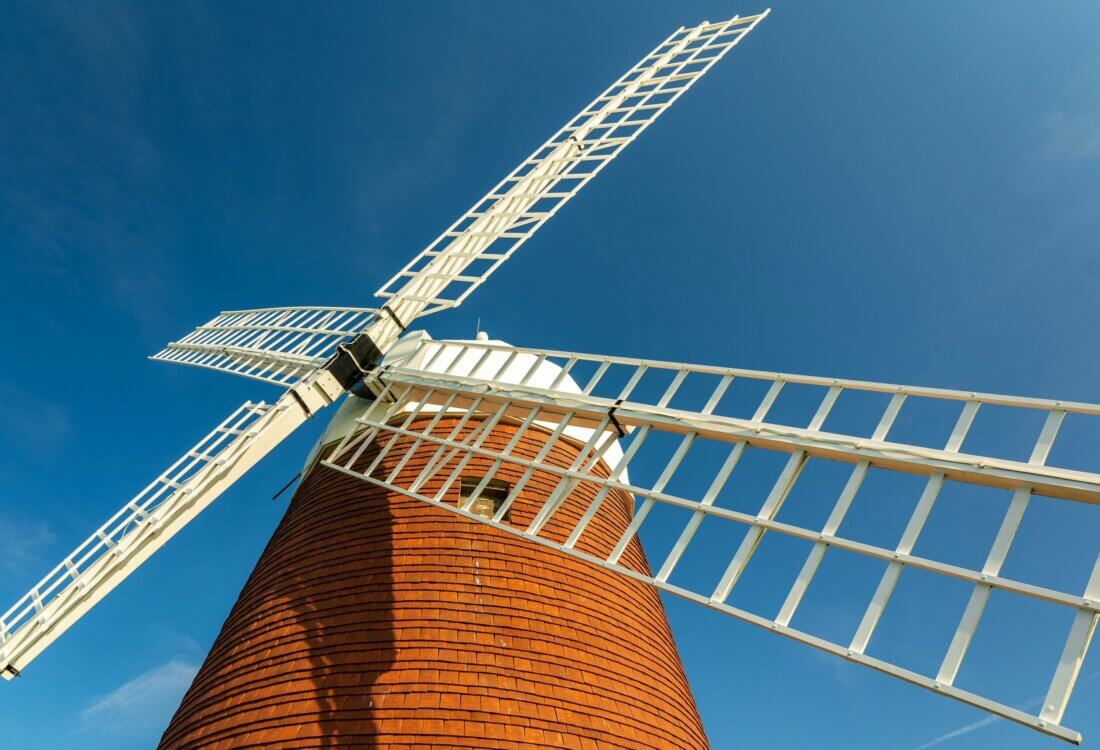
Suffolk developed several types of windmill. Post mills, with a wooden body that could be turned to face the wind, were characteristic of eastern England. Tower mills, on the other hand, used more substantial brick structures, while smock mills had timber framed bodies often covered in weatherboarding. Each design represented a different solution to the challenge of capturing moving air.
One remarkable survivor is Saxtead Green Post Mill, near Framlingham. Its familiar silhouette provides a wonderful introduction to the engineering of traditional milling. The structure is a reminder that the graceful movement of sails depended on heavy timbers, gears and considerable mechanical ingenuity.
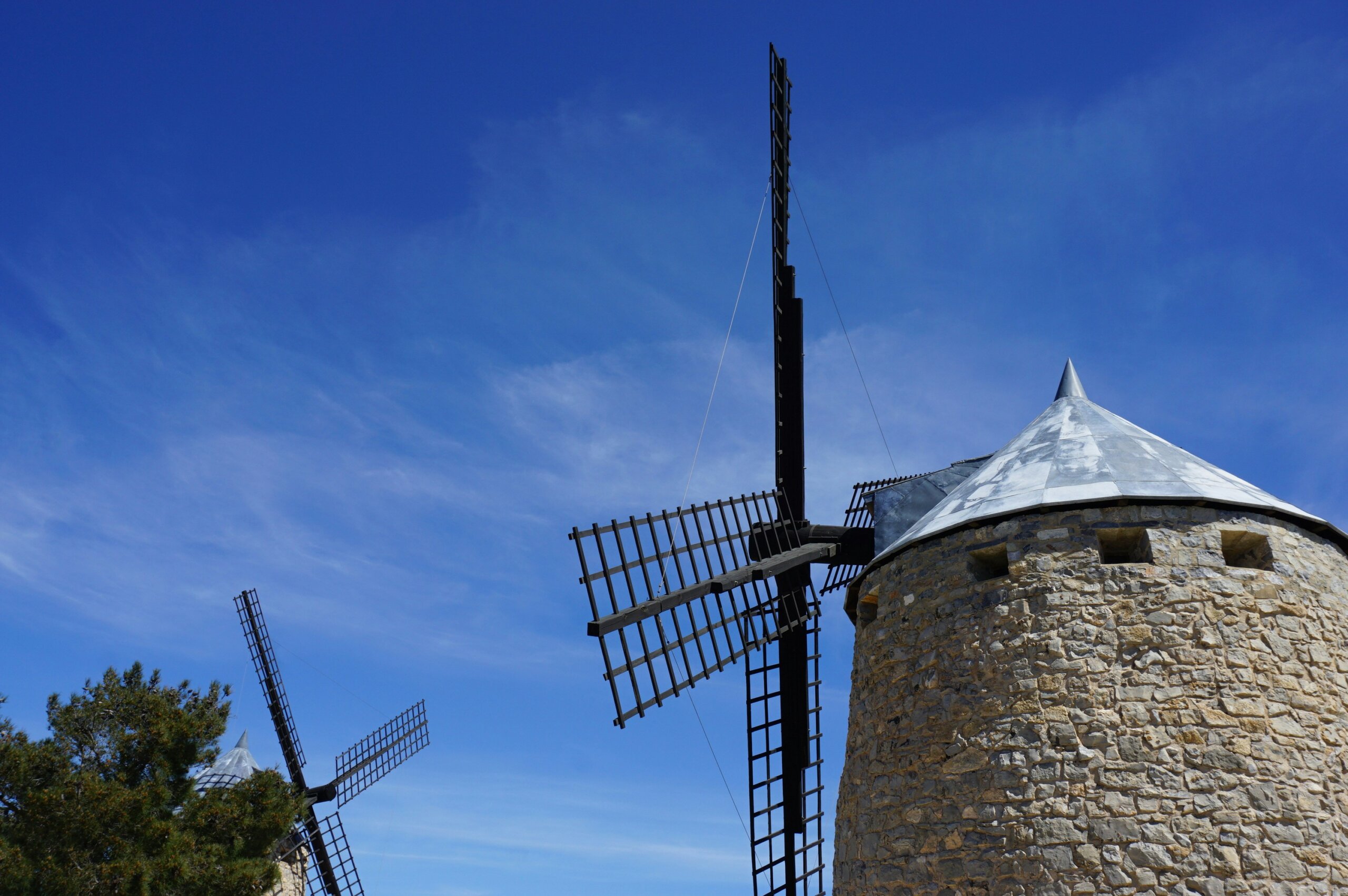
At Pakenham, visitors can also discover a watermill, offering a useful comparison between two historic sources of power.
It’s easy to romanticise a windmill now, of course. Working one, however, was a serious business involving heavy machinery and plenty of skill.
Life as a miller was not necessarily romantic, either. Machinery demanded constant attention, wind could be unpredictable, and flour dust created uncomfortable working conditions. Repairs were fairly costly, and a period of still weather could interrupt production at a moment’s notice. The miller’s skill lay in managing both a business and a complicated machine.
Industrialisation gradually changed everything. Steam engines, improved transport and larger commercial mills reduced the economic importance of many rural windmills. Some were converted to other uses, others fell into disrepair, and many disappeared altogether. Their absence has subtly altered the Suffolk skyline forever more.
Fortunately, conservation has preserved examples that allow us to understand the old technology. A restored windmill is not simply an attractive building, after all. It demonstrates how people once used local resources, practical mathematics and skilled craftsmanship to produce something essential.
For anyone exploring Suffolk, spotting a windmill adds another layer to the landscape. Imagine the sound of sails turning, the rumble of millstones and carts arriving with sacks of grain. These were busy workplaces, not decorative landmarks.
So keep an eye on the horizon as you explore Suffolk. A surviving mill isn’t just a pretty silhouette; it’s a reminder of work, ingenuity and the communities that depended on both. And if you find yourself staring at one for rather longer than expected, I won’t judge. They really are magnificent things, even without the sails turning.
To ensure that you’re returning to comfortable and cozy accommodation after your sightseeing, be sure to take a look at the current availability of our Barns and Barges for rent in Suffolk.


 Dogs stay FREE