
Lucca write-up in The Times October 2025
By Carl Scott
Amazing article in The Times last week, all about Lucca. The following is a rewrite of the article to avoid them getting all antsy and telling me off. This was from the Times. There’s a link at the bottom to the original article if you want to take a look.
And if they do get antsy with me, I’ll get antsy with them for not suggesting Casa Trebbio as where to stay, especially as we featured in The Times earlier in the year!
A quieter Tuscan city with big-character
Lucca is being cast as one of Tuscany’s under-the-radar gems. Unlike the heavy tourist bustle of places such as Florence, Siena or Pisa, Lucca offers a more relaxed, elegant version of the region. Its medieval core, encircled by a broad red-brick wall, is remarkably intact — the kind of setting you might imagine in a story-book or a film. The surrounding Apuan Alps add a mountainous silhouette to the skyline, and there’s a sense that the city is quietly waiting for you.

What makes it compelling is a mix of visual charm (towers, piazzas, historic wall walkways), cultural roots (Puccini and opera), and food that isn’t chasing the tourist crowd. It’s suggested as an ideal weekend city-break to taste Tuscany differently.

What to see & feel
- City walls: The 2.5-mile (≈4 km) circuit of walls that wrap around the old town is not just a historic fortification, but now a tree-lined promenade where you can walk or bike above the rooftops and enjoy an elevated view of Lucca. You’ll find bastions, hanging gardens and a quiet mild grandeur in this walk.
- Towers & rooftops: One standout is the Torre Guinigi — a 14th-century tower topped by seven evergreen oaks. Climbing its steps gives you expansive views over the terracotta roofs, piazzas, and back toward the hills.
- Puccini-heritage: Being Puccini’s hometown, Lucca leans into its operatic lineage. His birthplace is now a museum, and exploring it gives glimpses of his life, work and legacy. The city’s atmosphere invites you to wander thinking of arias and stagecraft.
- Plaza and amphitheatre history: The heart of the old town has the oval-shaped Piazza dell’Anfiteatro, which stands on the site of a Roman amphitheatre. It’s ringed by medieval buildings and cafés, giving a sense of layered history: from ancient arena to elegant piazza.
- Cathedral & churches: The cathedral, Duomo di San Martino, along with many churches (around 70 within the walls) speak to the city’s historic wealth and devotion. Even just strolling among them evokes Renaissance-era commerce, faith and community.

What to eat & drink
This is a place where local specialities matter:
- One dish mentioned is tordelli (stuffed pasta with ragù) or torta di verdure coi becchi (a vegetable pie with chard) — the kind of fare that reminds you you’re in Tuscany but not the tourist-menu version.
- A local sweet: buccellato (a raisin-filled sweet bread) is highlighted as a “must-eat” in Lucca – even noted that King Charles once dropped by.
- For something atmospheric, there’s an old wine‐cellar turned tasting spot, where the journey down the basement staircase through thousands of bottles feels historic and indulgent.
- The city also has relaxed, less-hurried dining venues in former laundry buildings, old houses etc., which add charm and authenticity to the meal. So dining isn’t just about food, it’s about place and atmosphere.
Why pick Lucca over the big names
- Less crowded: One recurring point is that, unlike Florence, Pisa or Siena, you’ll find fewer mass-tourist crowds, which means more leisure, less stress, and perhaps a more genuine feel.
- Character & coherence: The city has a “state of mind” — independent, quietly cultured, historically rich but not theatrically so. It invites you to slow down, observe, absorb.
- A mix of nature, architecture & music: You don’t just wander stone streets — you walk atop the walls, you climb rooftop gardens, you sense opera in the air, you see the hills, you taste local food.
- Surprise factor: Because it’s less well-known, you may feel you’re discovering something rather than just checking off the tourist list.
Suggested itinerary (sample for a weekend)
Here’s how the article suggests you might structure your time:
Day 1 (Arrival / Afternoon): Arrive, explore the city walls, settle into a café or wine bar in an old cellar, enjoy dinner in a former-mansion restaurant with slow-food approach.
Day 2 (Full day): Morning visit to the Puccini Museum (his birthplace), then climb Torre Guinigi for views. Lunch in a local trattoria. Afternoon stroll through historic churches and palaces, perhaps the garden of Palazzo Pfanner. Evening – dine in the Piazza dell’Anfiteatro zone, soak in the ambience, maybe catch a concerto if timing allows.
Additional touches: Use Lucca as a base to explore nearby countryside or smaller towns (the article mentions a day trip to the hill-town region of Garfagnana and the Valle del Serchio).
Final thought
If you already know Tuscany via the major icons, Lucca offers a fresh perspective: a beautifully preserved city with a strong identity, music-heritage, architectural charm, great food and relaxed energy. It doesn’t feel like a “lite version” of the big places — it has its own voice. For a weekend escape where you can walk everywhere, breathe easily and soak in history and culture without the crush, it sounds like a strong pick.
This is a link to the original article in The Times if you’d like to take a look.
Related Posts …
 19th June 2024
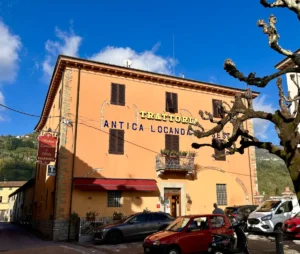
Antica Locanda Di Sesto
Discover Antica Locanda Di Sesto, a delightful Tuscan restaurant near Woodfarm Tuscany, offering authentic Italian cuisine.
 24th April 2025
Casa Trebbio in The Times – One of Tuscany’s Top 21 Villas!
Casa Trebbio featured in The Times! A stunning Tuscany escape now officially one of their top 21 villas. Nice hey?
 6th October 2024
Bagni Di Lucca Tuscany: a little intro
Explore the charming riverside town of Bagni di Lucca, just 30 minutes from Casa Trebbio. Discover thermal springs and scenic views.
 15th June 2023
Eating out near our Tuscan Holiday Cottage
Just some of the restaurants you can check out while staying in Casa Trebbio, our Tuscan holiday cottage. This page will be updated.
 21st October 2024
Lucca, our nearby city in Tuscany
Explore Lucca’s medieval charm, shopping, and hidden gems. Watch my video guide and subscribe to our YouTube Channel!

 Dogs stay FREE