 5th November 2026 (Updated on 5th November 2026)
The Mysterious Crinkle-Crankle Walls of Suffolk
By Carl Scott
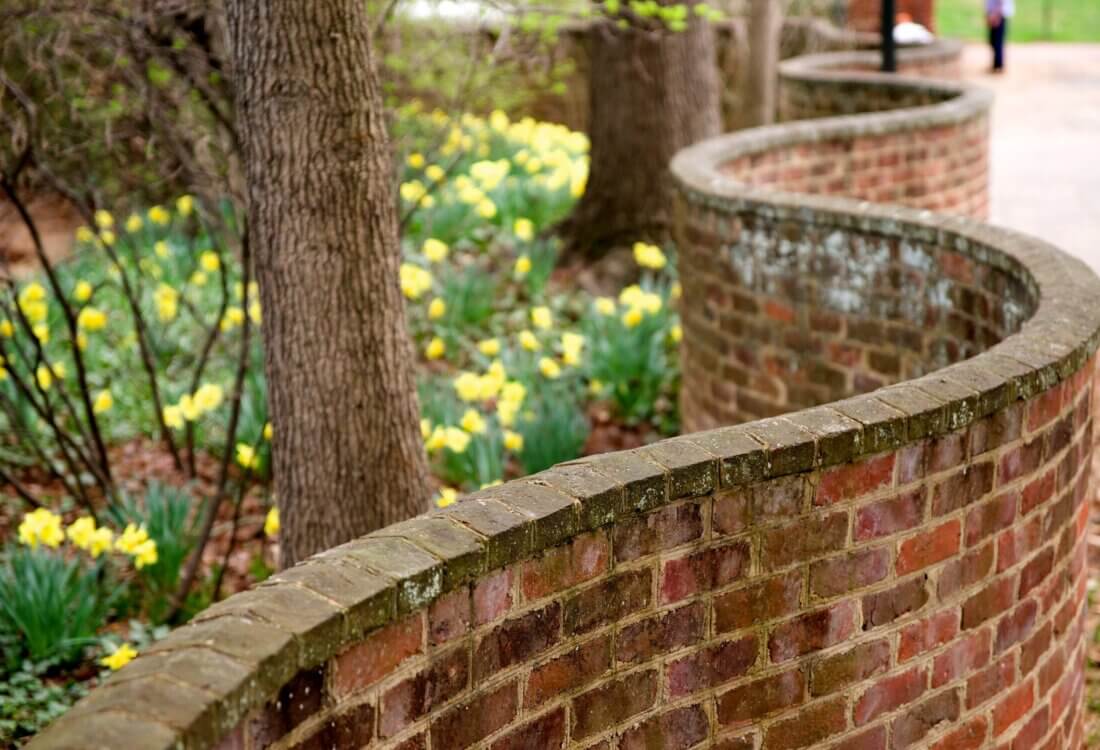
Somebody, somewhere, looked at a perfectly good straight wall and decided it needed to wiggle. And I’m rather glad they did. Suffolk’s crinkle-crankle walls are among the county’s loveliest architectural oddities, if you ask me: brick walls that snake across gardens in elegant curves. They look decorative, perhaps even slightly eccentric. But there’s more going on here than an eighteenth-century bricklayer getting carried away with his ruler might suggest. In fact, the engineering is rather clever. Which makes these walls both beautiful and a bit smug.
A straight freestanding wall needs sufficient thickness or additional support to remain stable. A crinkle crankle wall uses its alternating curves to provide strength, allowing builders to create a comparatively thin structure without regular buttresses. That could reduce the amount of brick required, even though the winding route is longer than a straight boundary.
The design became particularly associated with East Anglia, where brickmaking, estate gardens and practical ingenuity came together. The wonderfully rhythmic name is believed to have roots in Suffolk dialect, too. You may also hear these structures called serpentine walls or ribbon walls.
One of the best known examples stands at Easton, where a long curving wall recalls the village’s former estate landscape. Another can be found at Bramfield, while listed examples survive elsewhere across the county. Some walls stand beside roads, making them surprisingly easy to spot during a leisurely drive or walk.
Their curves were useful for gardeners too. Specifically, south facing sections could absorb warmth and create sheltered growing conditions for fruit trees. And no, the curves aren’t simply there to give passing gardeners something to discuss. There’s a practical reason behind the flourish.
There is also a fascinating economic angle. Britain taxed bricks between 1784 and 1850, and builders had good reason to think carefully about materials.
Despite their playful appearance, these walls required skill. A bricklayer had to maintain consistent curves, manage foundations and ensure the finished structure remained sound. The result combined engineering with a decorative flourish that still attracts attention centuries later.
What makes them especially appealing is their place in everyday scenery. You might pass a crinkle crankle wall without realising that its shape is doing important structural work. Once you understand the principle, the curves become an elegant demonstration of how traditional builders solved problems using geometry.
Suffolk has plenty of grand buildings to admire, but smaller architectural details like these can be just as rewarding. These walls belong to that category of local treasure: distinctive, useful and quietly beautiful.
There are ordinary garden walls, and then there are Suffolk’s crinkle crankle walls.
So if you spot a wavy brick wall on your travels around Suffolk, stop and admire it. Somebody put real thought into those curves, and the result has outlasted generations of fashions. It’s a lovely reminder that practical things needn’t be boring. Although I still wouldn’t recommend trying to build one yourself after watching a five-minute tutorial.
To begin planning your stay in Suffolk, be sure to take a look at the current availability of our Barns and Barges for rent.


 Dogs stay FREE